The foundation model for manufacturing know-how.
Blake is a multimodal model for the factory floor. It reads sensor traces, thermal images, part photos, voice notes and process sheets, and answers with a typed decision: the root cause with a probability, the faulty component on a 3D twin of your cell, and the work instruction for the fix. It learns from veteran process experts and is graded on what actually fixed the line.
Zero-shot, or pass your plant’s NCR history as context. No per-plant training.
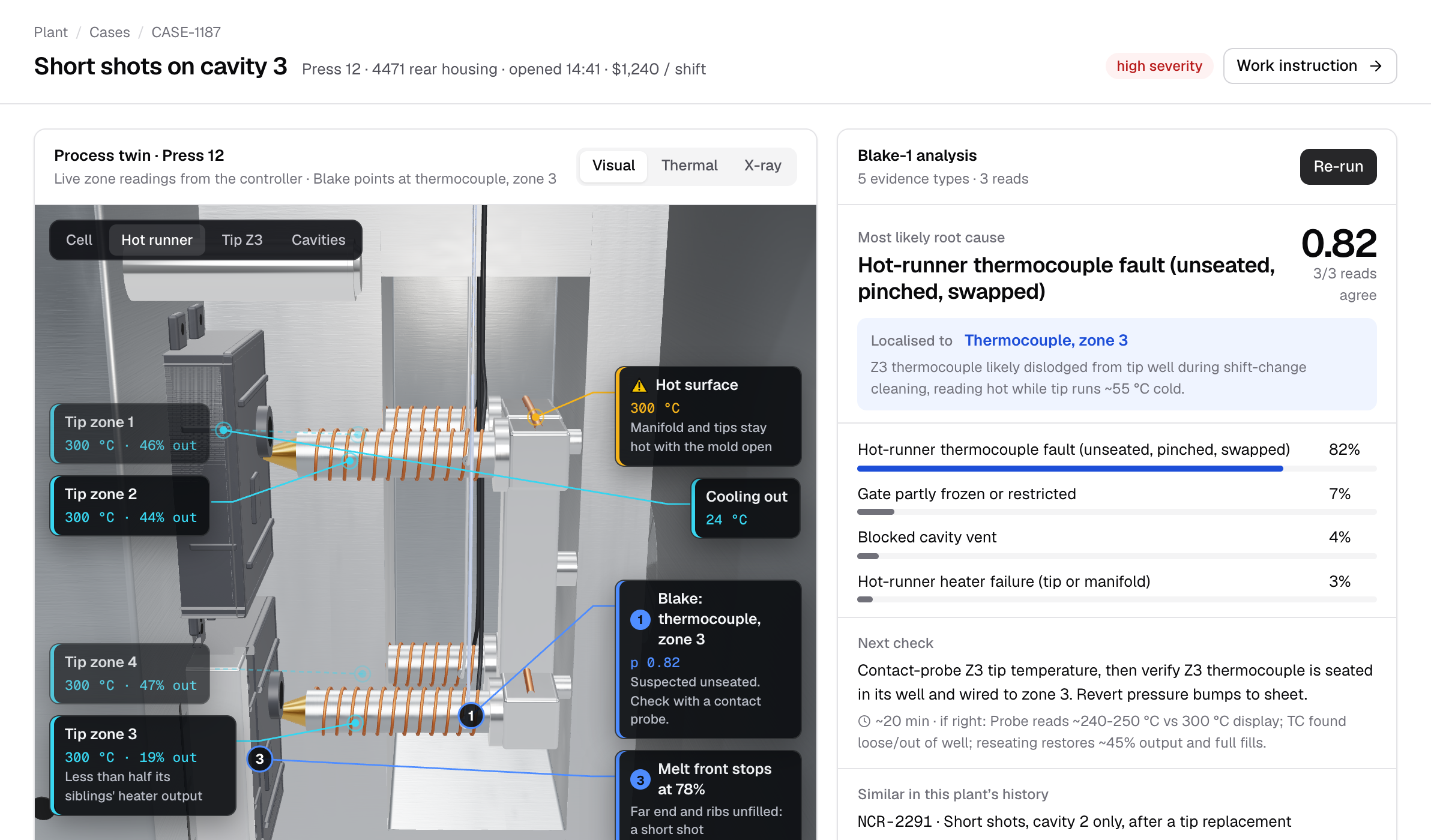
- Gate partly frozen or restricted0.07
- Blocked cavity vent0.04
- Hot-runner heater failure (tip or manifold)0.03
One platform, from evidence to fix
Every case gets one workspace: the evidence the plant already has, Blake-1’s decision, the component at fault on a 3D twin of the cell, and the work instruction to fix it.
Multimodal by default
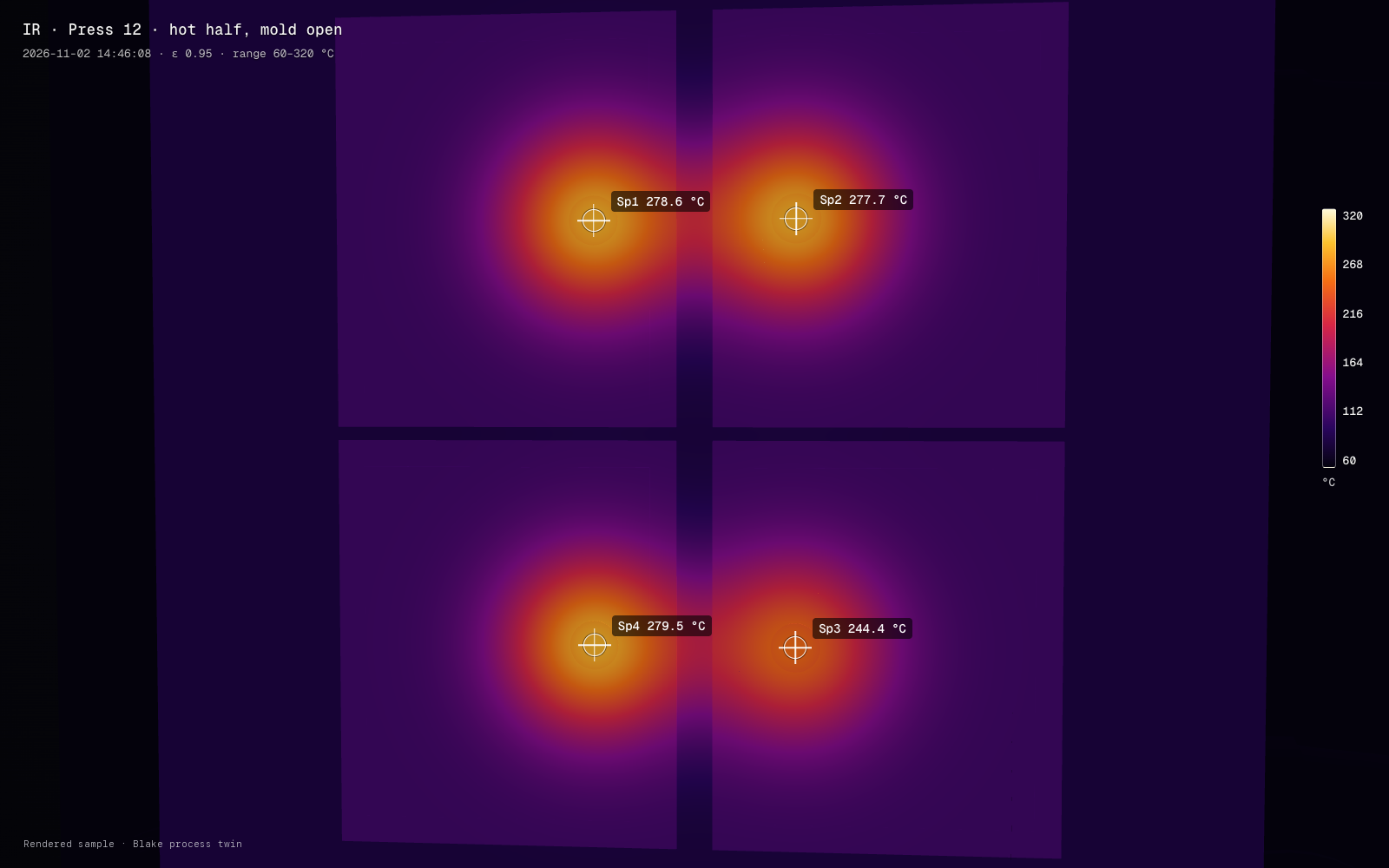
Controller traces, thermal and part images, voice notes and process sheets, read together. Blake says what each one shows.
A twin of the cell
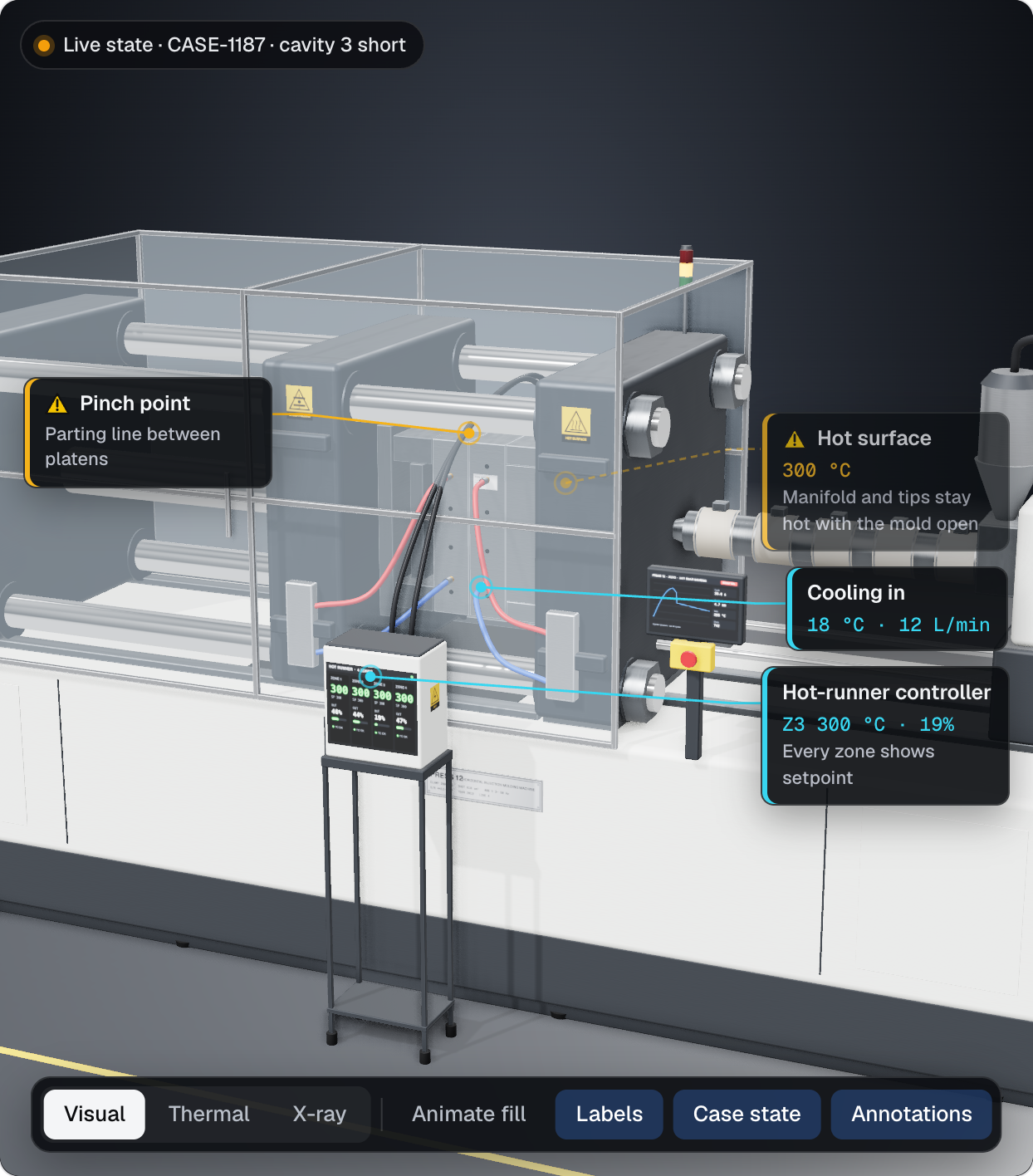
Visual, thermal and x-ray views of the machine and mold. The decision lights up the component at fault.
Every process, one model
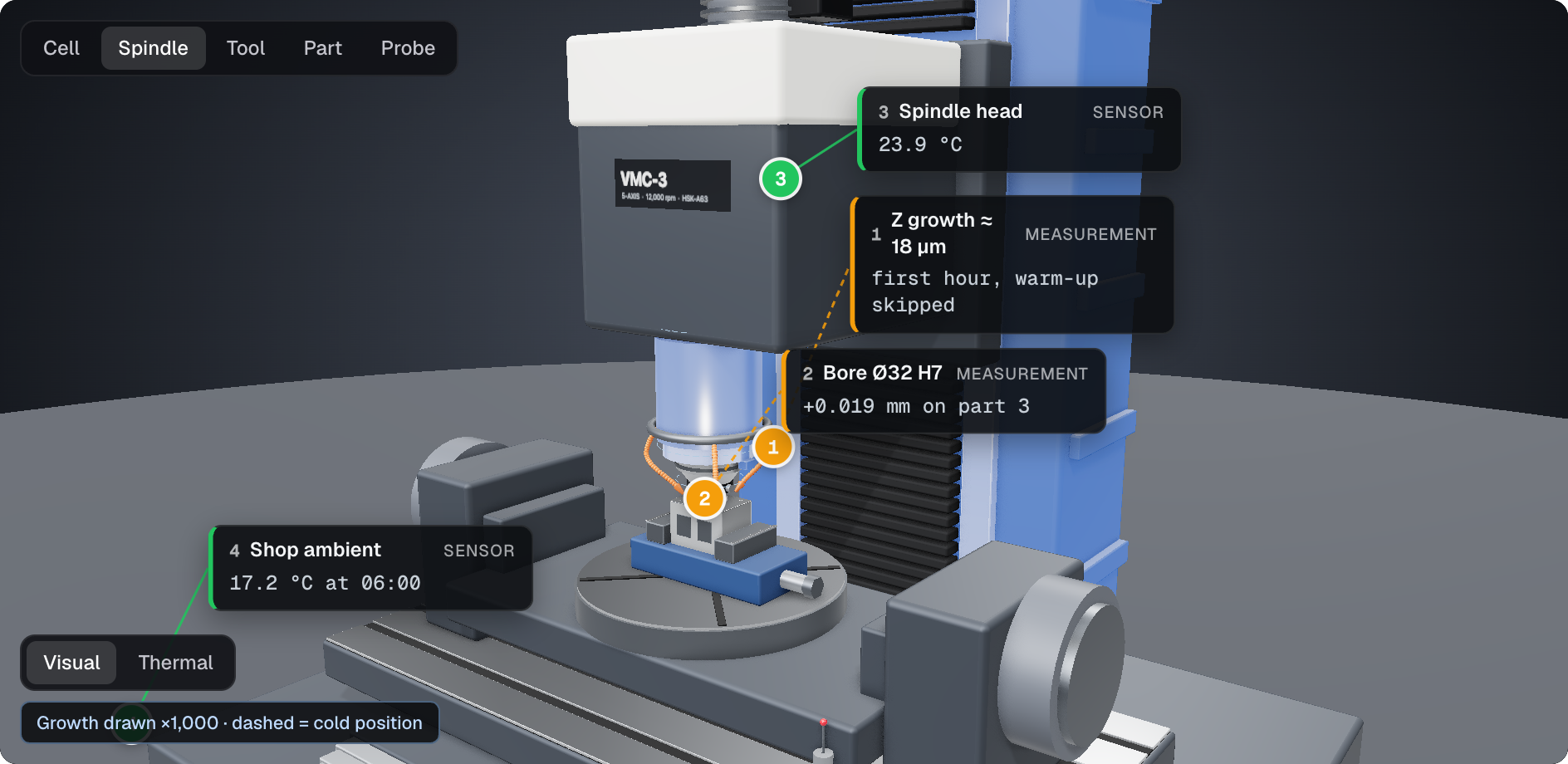
Molding, CNC machining and welding today. The same engine traced an oversize bore to spindle growth after a cold start.
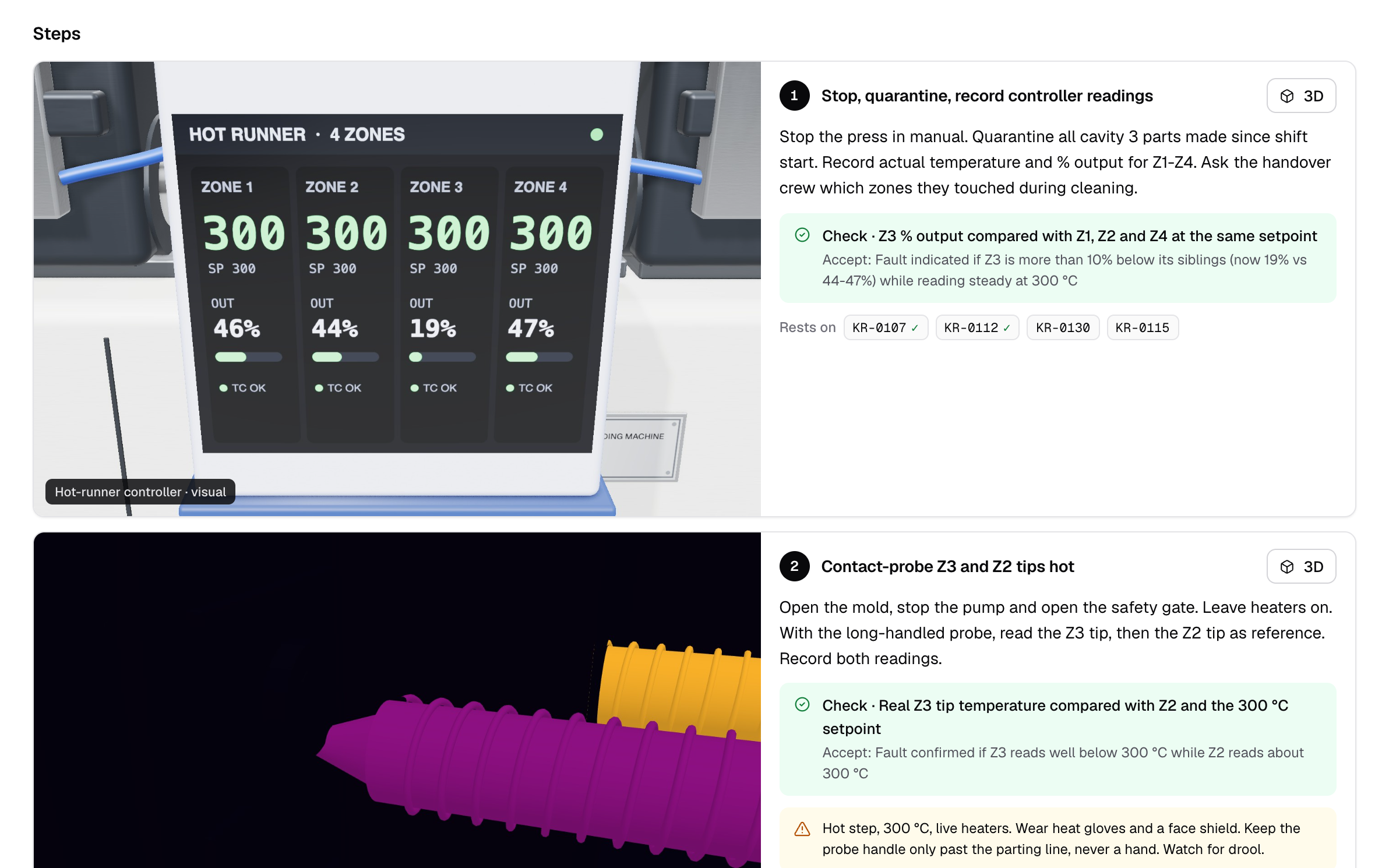
Work instructions that write themselves
Lockout, PPE, illustrated steps and acceptance criteria, generated from the decision and the expert records it cites.
How Blake learns
The know-how that keeps a line running isn’t in the historian. It’s in the people who ran it. Blake goes and gets it, turns it into records a model can use, and keeps only what plant outcomes confirm.
Recruit the people who know
We find veteran process engineers, setters and quality leads by process and material. Many are recently retired. They are paid per session and again for every record a plant outcome verifies.
RetiredSenior process engineer, injection molding31 years · Michigan, USInterview for the judgment, not the manual
The AI interviewer uses critical-decision-method probes: what did you notice first, what did you rule out, what would a newer engineer have missed. Each war story becomes a typed record with its cues, its exclusions and its action.
InterviewerWhen you walked up to the press, what did you check first on cavity 2, and what did you see?
ExpertThe controller. Every zone sitting right on 300, which looks perfect. But zone 2 is pulling something like 18 percent, the other three are around 45.
KR-0112verified- Cue
- One zone's output well below identical zones (e.g. 15-25% vs 40-55%)
- Ruled out
- Heater failure: a dead heater pins output high, not low
- Action
- Check that the thermocouple is seated in its well and wired to the right zone; confirm the real tip temperature with a contact probe.
Decide, with a probability
A plant sends a problem. Blake returns a root cause from a fixed vocabulary, a probability for each candidate, the cheapest next check, and an escalate flag when it isn’t sure, which sends the question to a matched human expert.
hot_runner_tc_fault0.82gate_restriction0.07Next check · contact-probe tip 3Escalate · noGraded on what fixed the line
Manufacturing grades itself. The plant logs what actually fixed each problem. A confirmed fix is a reward; a miss is a scored error. Records that outcomes confirm get more weight, and those that don’t get less.
D-10412026-09-02- Predicted
- hot_runner_tc_fault 0.72
- Plant confirmed
- hot_runner_tc_fault
- Result
- Correct · reward recorded
- Record
- KR-0112 · confirmed by 7 plant outcomes
An API, not a chatbot
Typed decisions drop straight into the NCR and 8D workflow you already run. It works zero-shot, or you can pass your plant’s history as context. There is no per-plant training.
{
  "case": {
    "process": "injection_molding",
    "part": "4471 housing, PA66-GF30",
    "symptom": "Short shots, cavity 3 only",
    "readings": [
      { "name": "Cushion",
        "value": "4.7 mm, stable" },
      { "name": "Tip output Z1-Z4",
        "value": "46% / 44% / 19% / 47%" }
    ],
    "context": "Mold cleaned at shift change"
  },
  "with_history": true
}{
"decision_type": "root_cause",
"top": {
"cause": "hot_runner_tc_fault",
"p": 0.82, "low": 0.82, "high": 0.82
},
"candidates": [
{ "cause": "hot_runner_tc_fault",
"p": 0.82, "records": ["KR-0112"] },
{ "cause": "gate_restriction",
"p": 0.07, "records": ["KR-0141"] }
],
"next_check": {
"action": "Contact-probe tip 3",
"minutes": 15
},
"history_matches": ["NCR-2291"],
"escalate": false,
"reads": 3
}Why now
US manufacturing engineers, technicians, supervisors, machinists, inspectors and maintenance workers are 55 or older. That is 26% of 4.34M.
US plants have 20–499 employees. Most have no data-science team.
Manufacturing grades itself. Pass/fail, CMM, scrap and first-pass yield are measured anyway, so every decision can be scored against what happened.
Your thirty years are worth more than a pension.
Teach Blake the processes you actually ran. Interviews are by voice, on your schedule, about the problems you solved and how you knew.
- Paid per session, at expert rates
For your time, whether or not a record comes out of it.
- Credited on every record you teach
Each record carries its provenance: whose judgment it is, and from which session.
- Paid again when a plant verifies your record
When an outcome confirms your record, you share in it.
Run a pilot
One process on one line, for six weeks. We interview your veterans and ours and connect your NCR and 8D history. Blake answers live on real problems, and every decision is graded against what fixed them.
- Scope
- One process, one line
- Length
- Six weeks
- Inputs
- Your veterans’ interviews, your NCR/8D history
- Graded on
- What actually fixed each problem